Acupuncture and dry needling use the same kind of fine, single-use needle, but they come from different traditions and are offered by different practitioners. Dry needling is based on Western anatomy and usually targets tight, tender spots in muscle, while acupuncture selects points according to Chinese medicine theory, and in Australia only registered practitioners can call themselves acupuncturists.
People ask me about this often, usually after they have had dry needling from a physiotherapist and want to know whether acupuncture is the same thing. This post sets out the differences as they stand in Australia. It is not an argument for one over the other: they are different approaches, used by different professions, and both have their place.
The needles are the same kind
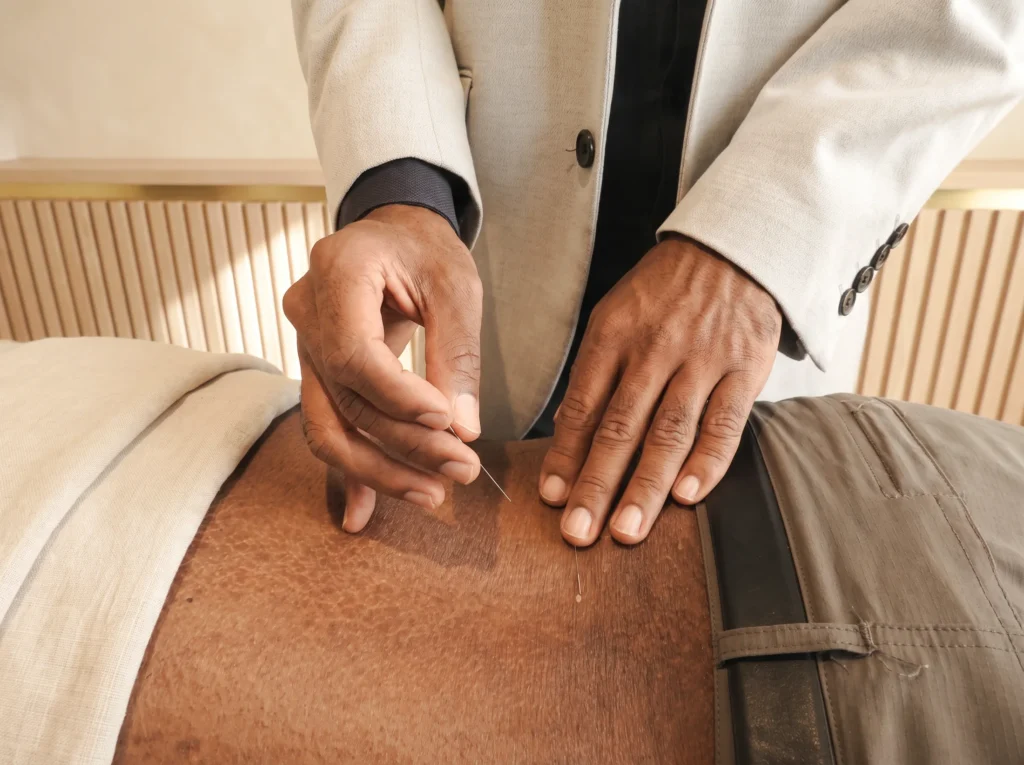
Both use solid, hair-fine needles called filiform needles. They are nothing like the hollow needle used for injections and blood tests, and nothing is injected. In both practices the needles should be single-use and pre-sterilised, opened in front of you and disposed of straight after. If you are wondering what they feel like, I have written about that in does acupuncture hurt?
Where the ideas come from
Dry needling grew out of Western anatomy and physiology. The practitioner feels for myofascial trigger points, which are tight, tender bands within a muscle, and places needles into those points and the surrounding soft tissue. It is usually one technique within a wider treatment from that practitioner.
Acupuncture comes from Chinese medicine. In Chinese medicine theory, points lie along channels (often called meridians), and they are chosen through what is known as pattern identification: working out the pattern behind your symptoms from a wider consultation. That is why an acupuncturist may place needles some distance from where you feel the problem, and why the first appointment involves more questions than you might expect.
In my own practice, an acupuncture session starts with a conversation about the concern that brought you in, along with sleep, digestion, energy and stress. I look at your tongue and feel your pulse, choose points from there, and the needles usually stay in for about 30 minutes while you rest. Cupping, gua sha or moxibustion may be added where they fit, and I explain each step before we begin.
Who can offer each
Acupuncture. “Acupuncturist” is a protected title under the National Law. In Australia it can only be used by practitioners registered with the Chinese Medicine Board of Australia in the acupuncturist division, or by medical practitioners whose registration is endorsed for acupuncture by the Medical Board. University programs that lead to registration are typically four-year full-time bachelor degrees. My own training is a Bachelor of Traditional Chinese Medicine, and my registration (CMR0002580420) is on the public AHPRA register.
Dry needling. “Dry needling” is not a protected title. It is most often offered by physiotherapists, and also by myotherapists, chiropractors and osteopaths, who learn it as additional training on top of their own qualification. Physiotherapists, chiropractors and osteopaths are registered with their own national boards. Myotherapists and massage therapists are not part of the national registration scheme.
Hygiene and standards
Whoever you see, you can check their registration on the AHPRA register. Registered practitioners have to meet their own board’s standards. For acupuncturists, that includes the Chinese Medicine Board’s infection prevention and control guidelines, which cover needle handling, skin preparation and the treatment room.
In New South Wales, practitioners who are not registered and who penetrate the skin, including with needles, come under the state’s skin penetration rules and must notify their local council. Whoever you see, it is reasonable to ask about their training and how they handle needles.
Health fund cover
Many extras policies list acupuncture as its own item when it is provided by a registered practitioner, often sharing an annual limit with remedial massage or Chinese medicine. Dry needling does not usually appear as a separate item; it is generally part of the visit with whoever provides it. Cover varies between funds and levels of policy, so check with your fund before you book. My post on whether acupuncture is covered by your health fund explains how claiming works at my clinic, where you pay on the day and claim through your fund afterwards with the itemised invoice I email you.
Can you have both?
Yes. Some people see a physiotherapist for dry needling and exercise, and come to me for acupuncture or Chinese herbal medicine as well. That works, as long as each practitioner knows what the other is doing. For anything new, sudden or worsening, see your GP first. More questions about what a treatment involves are answered on the frequently asked questions page.
Ready to book?
If you would like to try acupuncture at the clinic in Alexandria, you can book online or call (02) 9341 5775. If you have had dry needling before, mention it when you come in and I will explain how the session differs as we go.
Ahil Ganesan offers acupuncture, Chinese herbal medicine, naturopathy, cupping, gua sha and moxibustion at Project Dao in Alexandria, near Redfern station.
This article is general information only and is not a substitute for individual advice from a qualified health practitioner. If you have a health concern, please see your GP or book a consultation.