
Explore All Services
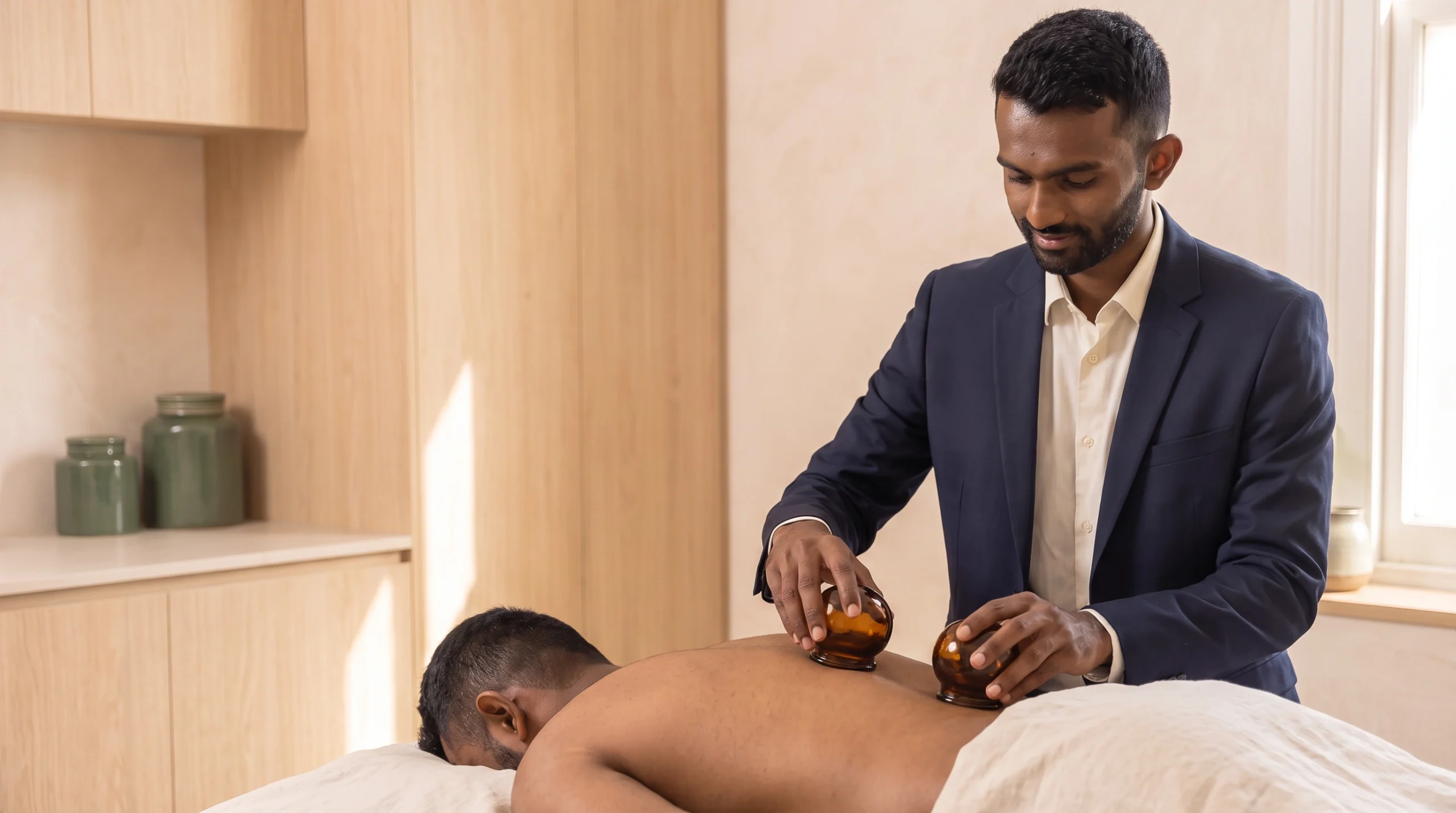
Cupping uses specially designed cups placed on trigger points and pressure points. Gentle negative pressure lifts the tissue, drawing blood flow into the area. It is commonly used for tight muscles.
It is one of the oldest techniques in the Chinese medical tradition, and versions of it exist across many cultures. The traditional idea has stayed the same for centuries: drawing blood flow into tight or congested tissue is intended to help it soften.
At the clinic, cupping usually works alongside acupuncture within the same session. Cups may rest still over a point for around 15 minutes, or glide across oiled skin as sliding cupping, which gives a deep stretch and massage to the muscle and fascia beneath.
A lifting technique for muscle tension
Unlike massage, which presses down into the muscle, cupping lifts the tissue instead. That lifting pressure feels quite different from ordinary kneading.
Often combined with acupuncture in a single session
A firm, warming and deeply relaxing sensation
About Cupping Marks
The round marks that can follow treatment show that blood flow has entered the area. They are not usually painful and usually fade within a few days to a week.
Why patients choose cupping
Patients most often book cupping for tight shoulders, stiff backs and general muscle tension, particularly tension built up through desk work, training or repetitive strain. Pain is not always felt where it starts; Ahil’s article on the link between where it hurts and where the pain begins explains how connected the body’s tissue really is.
- Cups stay in place for around 15 minutes
- Marks fade in days to a week
- Itemised invoice emailed for health fund claims
0
Minutes cups typically stay in place
20 0
In clinical practice since
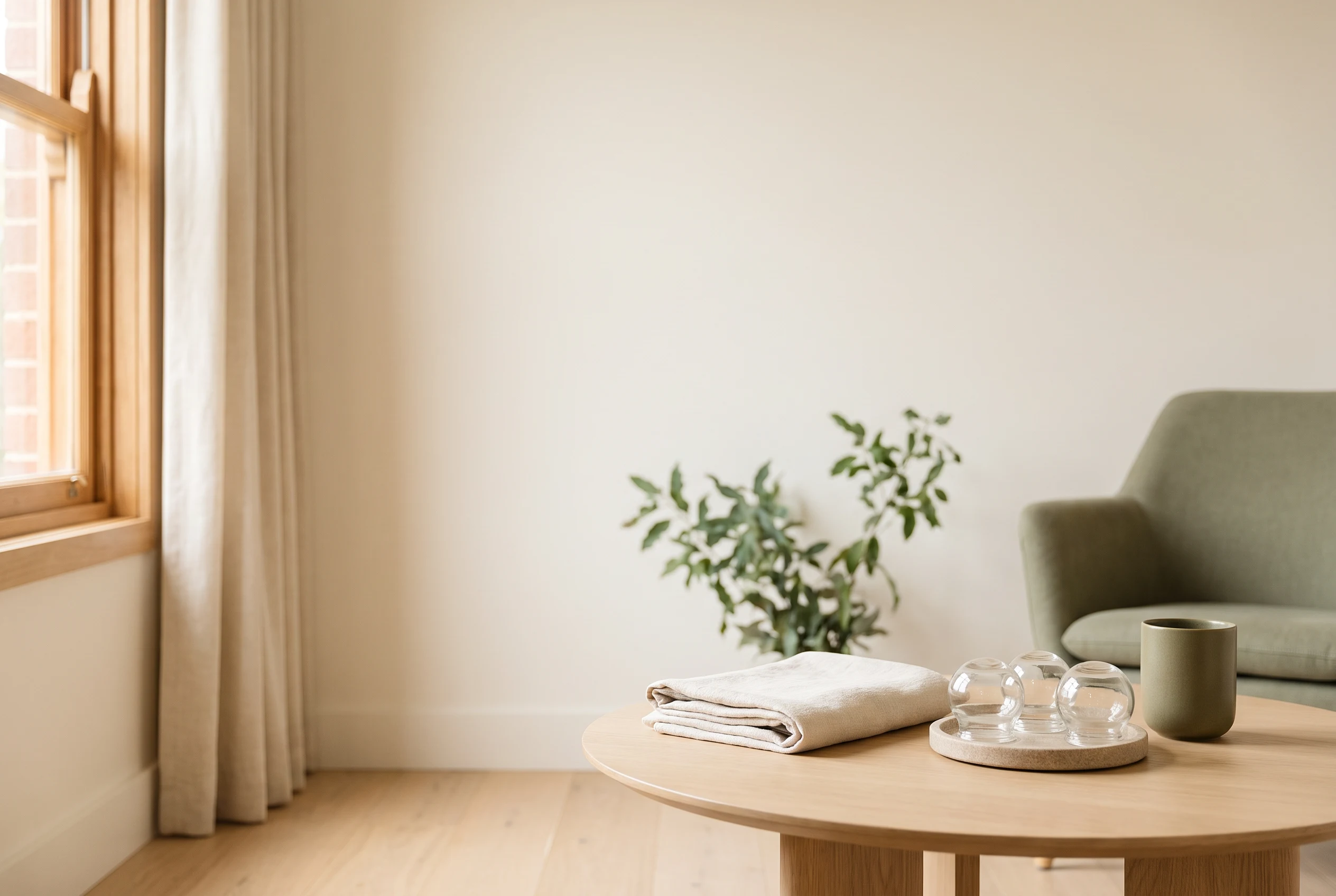
What to expect during a session
Most people describe the sensation as a firm, pleasant pull rather than pain, and the pressure is adjusted to your comfort throughout. Cupping is usually finished within your normal appointment, leaving time for acupuncture or other therapies in the same visit.
Further reading: What is cupping and those round marks?, Cupping aftercare: what to wear, showering and exercise, Cupping for desk workers and Cupping, gua sha or moxibustion compared.
Frequently asked questions
Cupping uses specially designed cups placed on trigger points or pressure points. The cups provide negative pressure, lifting the tissue and drawing blood flow into the area. It is used to ease muscle tension.
Cupping draws blood flow into the area, and from a Chinese medicine point of view is used to clear stagnation. It is commonly used for tight, sore muscles across the back, neck and shoulders.
Round marks can appear where the cups sat. They are a sign that blood flow has entered the area, are not usually painful, and usually fade within a few days to a week.
Most people describe the sensation as a firm, pleasant pull rather than pain. Many find it deeply relaxing, and the pressure is always adjusted to your comfort.
Yes. Cupping is often used alongside acupuncture within the same session, as part of one coordinated treatment plan.