A stiff neck that arrived in the last day or two, with no other symptoms, is usually something you can work on at home with a spoon, some oil and ten minutes. A stiff neck that keeps returning, followed an injury, or comes with numbness, tingling, headache or fever is a reason to come in. That is the short answer. The rest of this post explains how I think about the neck, what gua sha is traditionally used for, and how to tell which situation you are in.
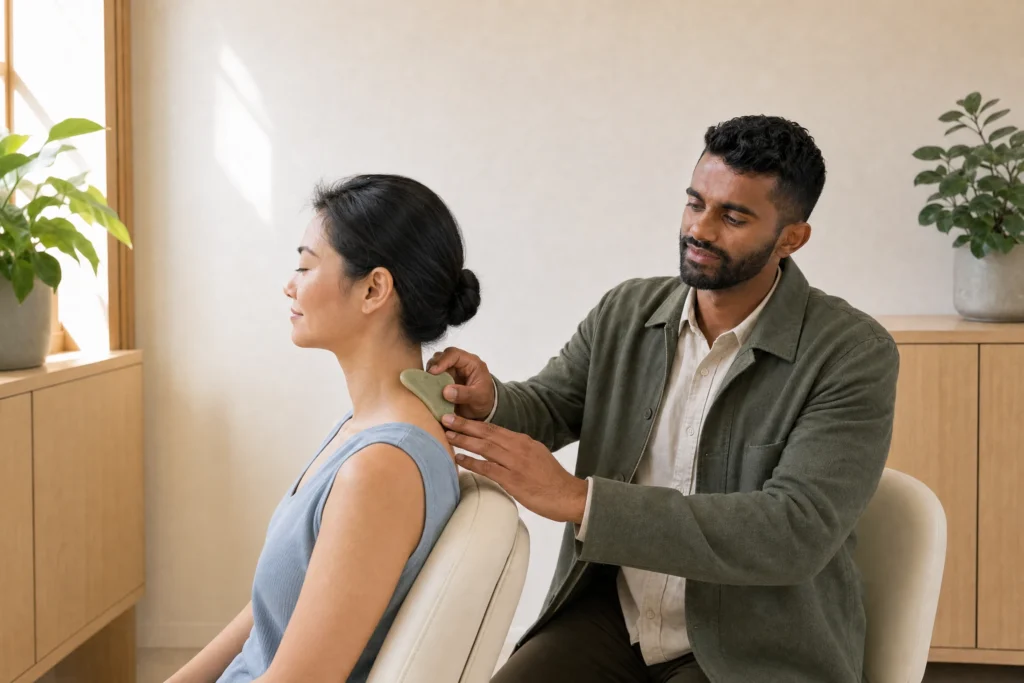
Gua sha, for anyone new to the word, is a scraping technique. A smooth-edged tool is drawn firmly across oiled skin, usually on the back of the neck and across the shoulders, until a speckled redness called “sha” rises. The redness fades within one to seven days.
The neck from a Chinese medicine perspective
In Chinese medicine theory, the back of the neck is one of the most exposed parts of the body. The classical texts describe a group of points there as “Wind” points, and Wind, in this way of thinking, is the name given to influences that arrive suddenly from outside: a cold draught, a change in the weather, a night sleeping under an open window. I have written about this in my post on why Chinese medicine talks about Wind, winter and your neck.
Within that framework, a neck that seizes up overnight is read as something caught at the surface. The traditional response is to move it out: warmth, movement and, very often, gua sha across the affected muscles. This is theory, not a medical diagnosis, and I hold it alongside the plainer explanations of how you slept, how many hours you spent at a screen and what you were carrying.
What gua sha is traditionally used for
Across the neck and shoulders, gua sha has been used for centuries for two things: muscles that feel tight and congested, and the first chilled, stiff feeling that Chinese medicine associates with Wind. The firm strokes bring colour to the surface, and the sha that appears is considered, in this tradition, a sign that something held in the tissue is being released.
From a Chinese medicine perspective, gua sha may assist in the management of tension-related stiffness in the neck and shoulders. I say “may” deliberately. What it does for you depends on why your neck is stiff in the first place, and that is the question I want answered before anyone reaches for a tool.
When home gua sha is a reasonable choice
Home gua sha suits a particular kind of stiff neck. All of these should be true:
- it started recently, within the last few days
- it followed something ordinary, such as a draught, a long drive or an awkward night
- you have no numbness, tingling, headache, dizziness or fever
- there was no fall, knock or sudden jolt
- you are otherwise well, and not on medication that thins the blood or makes you bruise easily
If that describes you, my step-by-step guide to gua sha at home walks through the tools, the oil, the strokes and the areas. Eat something beforehand, use less pressure than you think you need, and stop if the skin looks like it might break. The redness is expected. Broken skin is not.
Give it a day or two. If the neck is settling, keep going with warmth and gentle movement. If nothing has changed, come in.
When to come in instead
Book an appointment when any of these apply:
- the stiffness keeps coming back
- it followed an injury of any kind
- it has lasted more than a few days without easing
- it comes with headache, numbness, tingling or pins and needles in the arms or hands
- you also have a fever, feel unwell generally, or the neck is stiff in a way that makes it hard to lower your chin
The last two groups are red flags: a fever with a stiff neck, or numbness and tingling that is new, should be checked by a doctor before anything else.
Recurring stiffness is the one people most often leave too long. A neck that seizes every few weeks is telling you something about posture, sleep or load, and scraping the surface each time does not answer that question.
What I do that the spoon at home cannot
Assessment. Before any tool comes out, I feel along the neck, the tops of the shoulders and between the shoulder blades. I am looking for where the tightness actually sits, which is often not where you feel it, and whether the pattern points to the neck at all.
Combination. In clinic, gua sha is rarely on its own. It usually sits within an acupuncture session, and I sometimes add cupping across the upper back, where the muscle is broad and flat. Each technique reaches the tissue in a different way, and choosing the mix is part of the work.
Follow-up. I can see what the sha looked like, ask what changed by the next visit, and adjust.
If you are unsure which category you fall into, the gua sha service page explains what a session involves, or simply call and describe it. I am happy to say “try it at home first” when that is the honest answer.
Ready to book?
To have your neck assessed and talk through whether gua sha, acupuncture or a combination is the right approach, you can book online or call the clinic on (02) 9341 5775. Same-day appointments are often available.
Ahil Naturopath/Acupuncture is a clinic located near Redfern, Alexandria and Waterloo. We also service areas across Sydney including Botany, Camperdown, Darlinghurst, Erskineville, Eveleigh, Mascot, Newtown, Rosebery, Surry Hills and Zetland.
We offer Acupuncture, Naturopathy, Herbal medicine, Traditional Chinese Medicine (TCM), Cupping, Gua Sha (Scraping) and Moxibustion services in South-East, Eastern and Inner City of Sydney.
This article is general information only and is not a substitute for individual advice from a qualified health practitioner. If you have a health concern, please see your GP or book a consultation.