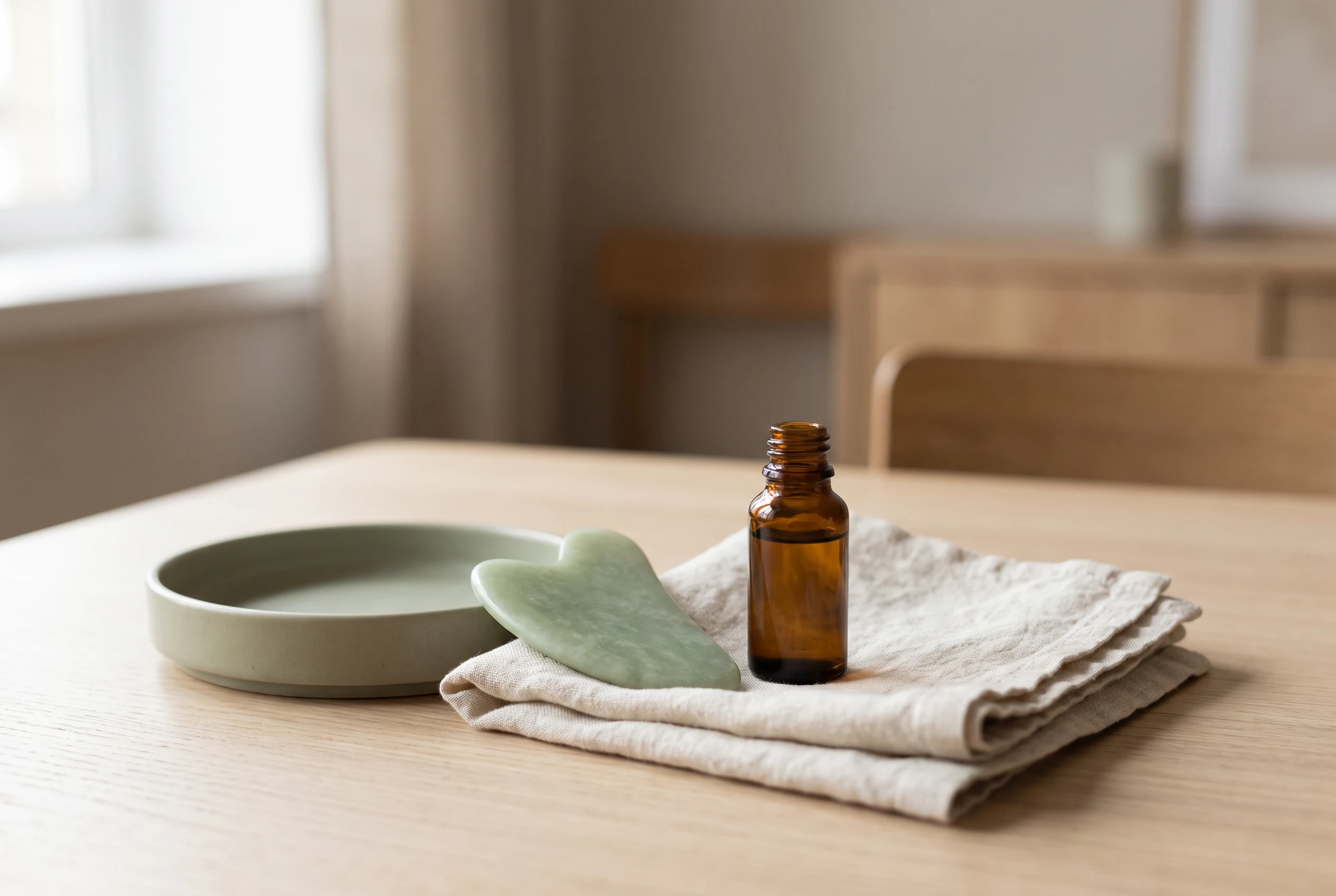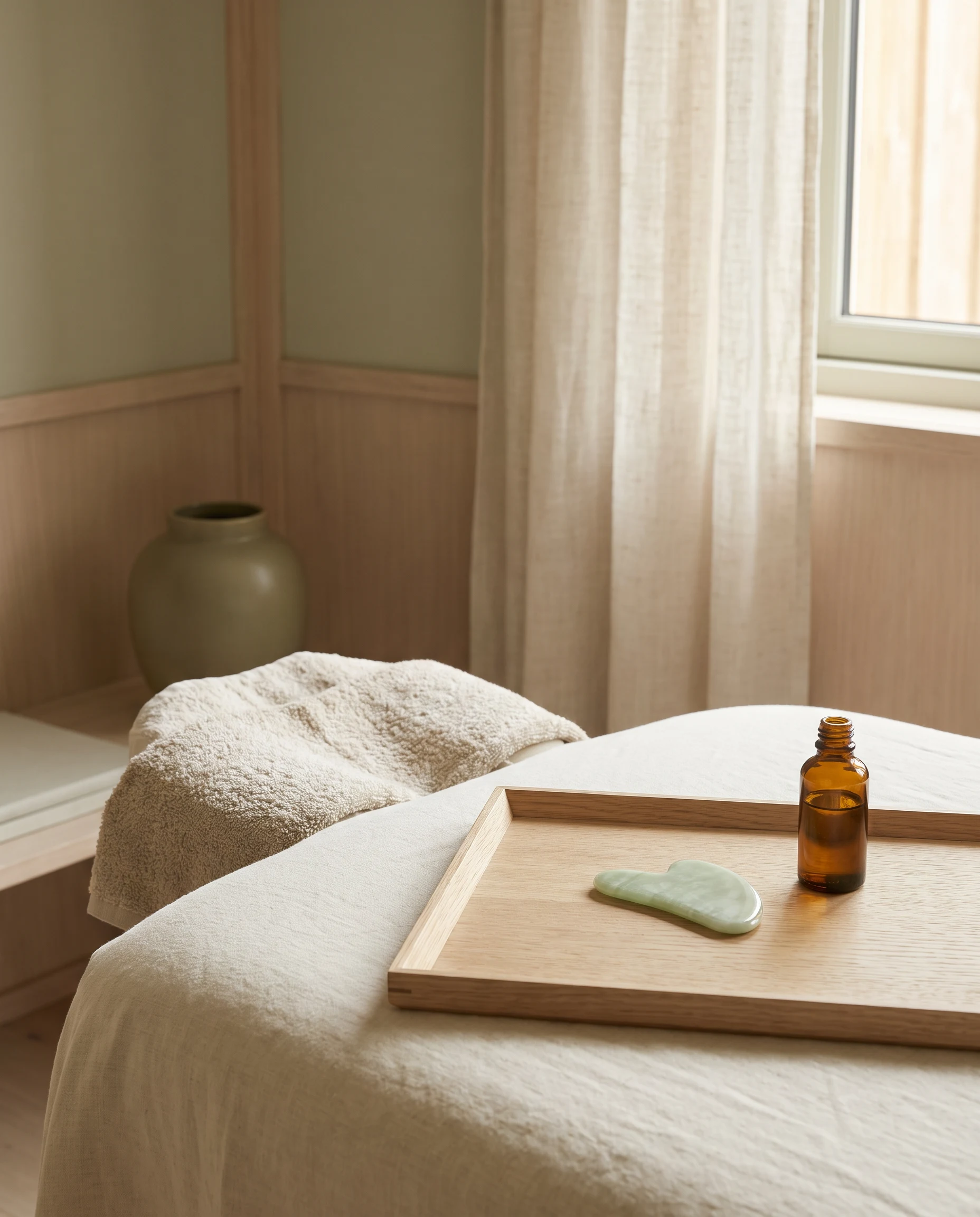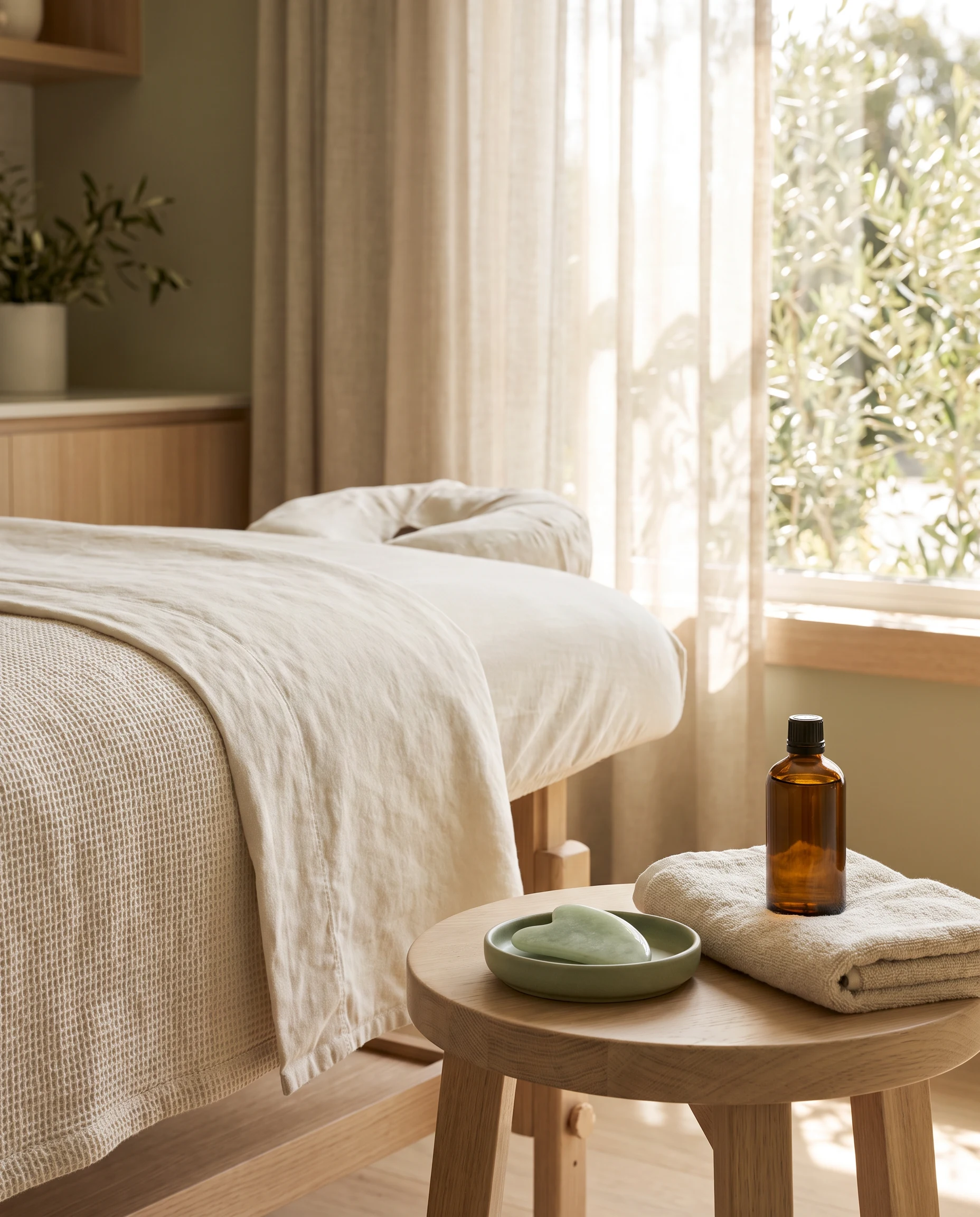
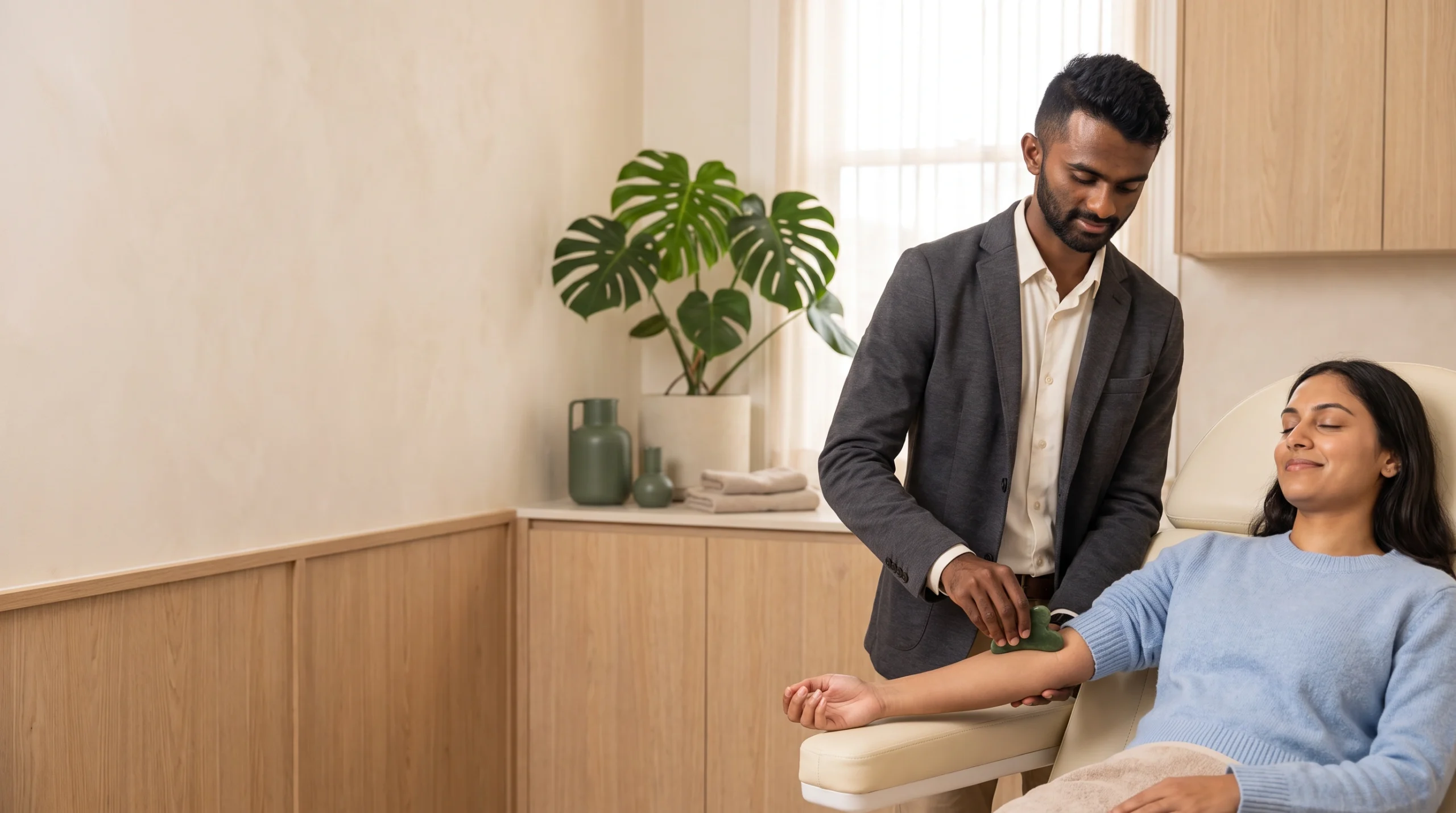
Gua sha, also known as scraping, is a massage technique that uses a smooth tool, traditionally jade, traditionally used to stimulate circulation in a localised area of the body.
The technique has been passed down through East and South East Asian households and clinics for many generations, used for muscle tension and as a traditional response to the first signs of a cold. As a myofascial technique, it is used to work on tight muscle and fascia.
Ahil applies gua sha with an ointment or oil so the tool glides smoothly over the skin, most commonly across the neck, shoulders and back, and usually within a normal appointment alongside acupuncture. There is even a gentle version you can learn yourself: see how to do gua sha at home in Patient Resources.
The strokes follow the muscle fibres and the body’s channels, working section by section until the tissue warms and releases. Ahil adjusts the angle and pressure of the tool to the area being treated, from the broad muscles of the back to the finer lines of the neck and shoulders.
The redness that can appear after treatment, known as sha, is expected and fades within one to seven days.
Patients commonly book gua sha for muscle tightness and restricted movement across the neck, shoulders and back, and it may assist in managing tension-related discomfort. From a Chinese medicine perspective, the technique moves stagnation and supports local circulation.
The strokes are firm and rhythmic, and most patients find the sensation relieving rather than painful; pressure is always adjusted to your comfort. Gua sha is usually finished within your normal appointment, often alongside acupuncture or cupping in the same visit.
Further reading: Facial gua sha versus clinical gua sha, Gua sha for a stiff neck: at home or in clinic? and Cupping, gua sha or moxibustion compared.
Gua sha, also known as scraping, is a massage technique which involves rubbing the skin with a smooth implement, usually jade, traditionally used to stimulate blood circulation in that localised area. As a myofascial technique, it is used to work on tight muscle and fascia.
Petechiae, or sha, are the red marks that can come up through gua sha. They are expected, painless and go away within one to seven days.
An oil or ointment is always used so the tool glides over the skin. The strokes are firm, and most people find the sensation relieving rather than painful; pressure is adjusted to your comfort.
It is commonly used for muscle tightness and restricted range of motion across the neck, shoulders and back, and may assist in managing tension-related discomfort.
Yes. Gua sha is often performed alongside acupuncture or cupping within the same session, as part of one coordinated treatment plan.
Acupuncture, Chinese herbal medicine and naturopathy with Ahil Ganesan in Alexandria, Sydney. Registered practitioner, health fund rebates claimable on eligible services.
Project Dao, Shop 2/8 Botany Rd, Alexandria NSW 2015
Stay Updated With Health Tips & Services
Copyright © 2018 - 2026, Ahil Naturopath. All Rights Reserved.